.png)
STEAM Series
STEAM education courses offer students a well-rounded skill set encompassing science, technology, engineering, arts, and mathematics.
By combining these disciplines, students gain a holistic understanding of real-world applications, fostering innovation and preparing them for diverse career paths in fields like engineering, design, research, and entrepreneurship.


Course Overview
The world of aviation offers a wide range of career options, including pilots, aerospace engineers, air traffic controllers, and aircraft maintenance professionals.
By using a flight simulator, you can learn to fly a full circuit, gaining hands-on experience in flight controls, takeoff and landing procedures, and aircraft systems.
Exploring these topics will develop your foundational aviation knowledge and spark a curiosity and interest in the field.
Aviation Science

Topic 1
Introduction to aviation science
-
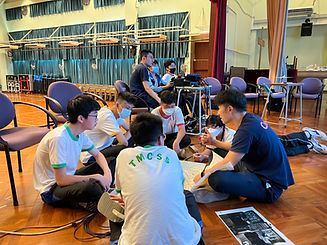
Introduction to various career opportunities in the aviation industry, such as pilots, air traffic controllers, aircraft engineers, etc.
-
Introduce flight simulator hardware + software i.e. flight instruments
-
Basic BAK theories
-
Briefing for flight preparation and checklists
Topic 2
Simulator manoeuvres
-
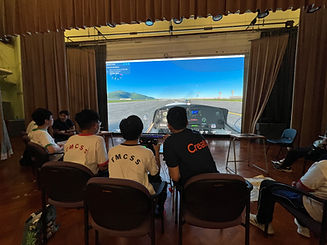
Step-by-step instructions on performing a safe takeoff, including throttle control and rotation techniques
-
Practice sessions to experience takeoff procedures in the simulator
-
Maneuvors – Descend, Approach & Landing
-
Guidance on landing techniques, such as approach angles, flare, and touchdown procedures
Topic 3
Individual practice session
-
Techniques for a controlled descent and a smooth landing approach
-
Individual practice sessions for each student to refine their descending and landing skills in the simulator
-
Introduction to checklists before, during, and after flight
-
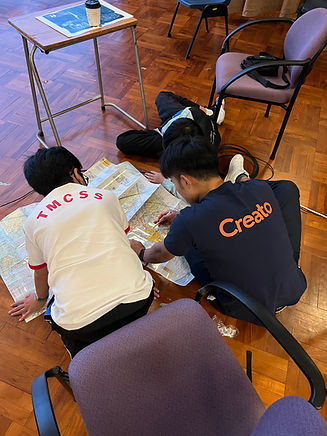
Practise flying a full circuit
Intended Learning Outcome
What students can take away from the course
01
Gain a basic understanding of aviation principles, including flight controls, lift, and navigation
03
Acquire knowledge about aircraft systems, safety protocols, and the importance of using checklists
02
Develop practical skills in flying, performing full circuit unaided.
04
Cultivate a curiosity for further exploration of aviation-related career & learning opportunities

Course Overview
This course covers hardware assembly, design principles, cross-platform IoT applications, and advanced Python programming for smart vending machines.
Students will learn to integrate coin mechanisms, bill validators, and touch screen interfaces, create visually appealing interfaces, develop cross-platform IoT applications, and utilize Python for tasks like inventory management and data analytics.
Upon completion, students will be equipped with the skills to create and operate efficient smart vending machines.
STEAM Smart Vending Machine

Topic 1
Hardware Assembly
-
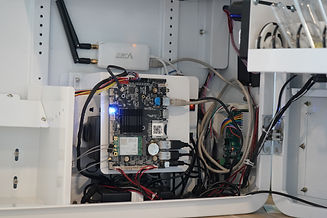
Understand the mechanical structure of a vending machine.
-
Develop skills to control and manage vending machine inventory effectively.
-
Gain practical experience in programming and customizing vending machine settings.
-
Learn the techniques to troubleshoot common issues and perform basic maintenance tasks.
Topic 2
Design & multimedia
-
Implement responsive layouts and dynamic interactions based on Figma / Unity designs.
-
Utilize e.g. Wix as an alternative tool for multimedia content creation and control
-
Use e.g. Wix to develop the content control process

Topic 3
Cross Platform IoT application
-
Understand the concept and importance of cross-platform application design.
-
Explore various cross-platform development frameworks and tools.
-
Design cross-platform applications using e.g. Figma & Wix
-
Develop skills in designing user interfaces that adapt to different devices and platforms.

Topic 4
Introduction to Python Programming
-
Introduction to Python programming with an emphasis on applications in a vending machine context. By the end of the course, students will have a working understanding of Python fundamentals and will have developed a simple vending machine program that integrates with an API.
-
Data types, control flow, functions, data structures, APIs, file handling and exceptions

Topic 5
Advanced Python & integration for vending machine operation
-
Introduce students to the concept and significance of APIs in modern software development.
-
Familiarize students with Python and its libraries for API development.
-
Understand the fundamentals of RESTful API design and best practices.
Intended Learning Outcome
What students can take away from the course
01
Able to assemble smart vending machine from parts to one integrated prototype.
03
Apply programming concepts to build functional and interactive vending machine applications
02
Application of content management system to create & manage multimedia content
04
Develop skills to build, test, and deploy APIs for vending machines.
Student Achievement
Students built and modified a smart vending machine to make it suitable for use in school applications.

Course Overview
This course covers extensive knowledge in mobile app development and multimedia content design using FlutterFlow with low demand in coding knowledge.
Students will learn the logical flow of a mobile app from the perspective of an app developer, empathize users and design user-friendly interfaces accordingly, handle various data types, and develop comprehensive functions of the app.
Upon completion, students will be equipped with the skills to draft mobile app interfaces and create prototypes with well-rounded considerations.
Low-code
Mobile
App
Development
&
Multimedia
Design

Intended Learning Outcome
What students can take away from the course
01
Use low-code software i.e. Flutterflow to design apps
03
Cultivate students' awareness and interest in user-centric product design
02
Develop students’ creative thinking and improve software design capabilities
04
Improve the diversity of creations combining multimedia with AI
Trusted by


Frequently Asked Questions
Get Quotation
Join 1600+ students to grow together in the Creator Economy.